Endpoint A
Host / sensorApplication and processing
Wi-R interfaceTransceiver + host interface
Local power A
Coupling interface / electrode
Wi-R BAN
Wi-R BAN connects devices through a localized electric-field channel, on a person or along a suitable conductive structure.
Connect sensing, compute, and interaction with low active chip energy.

Smart glasses, a sensor, a watch, and local compute share a wearable system.
Endpoints follow a suitable conductive structure from base to end effector.
Illustrative endpoint layout. Data connection; each device keeps its own power.
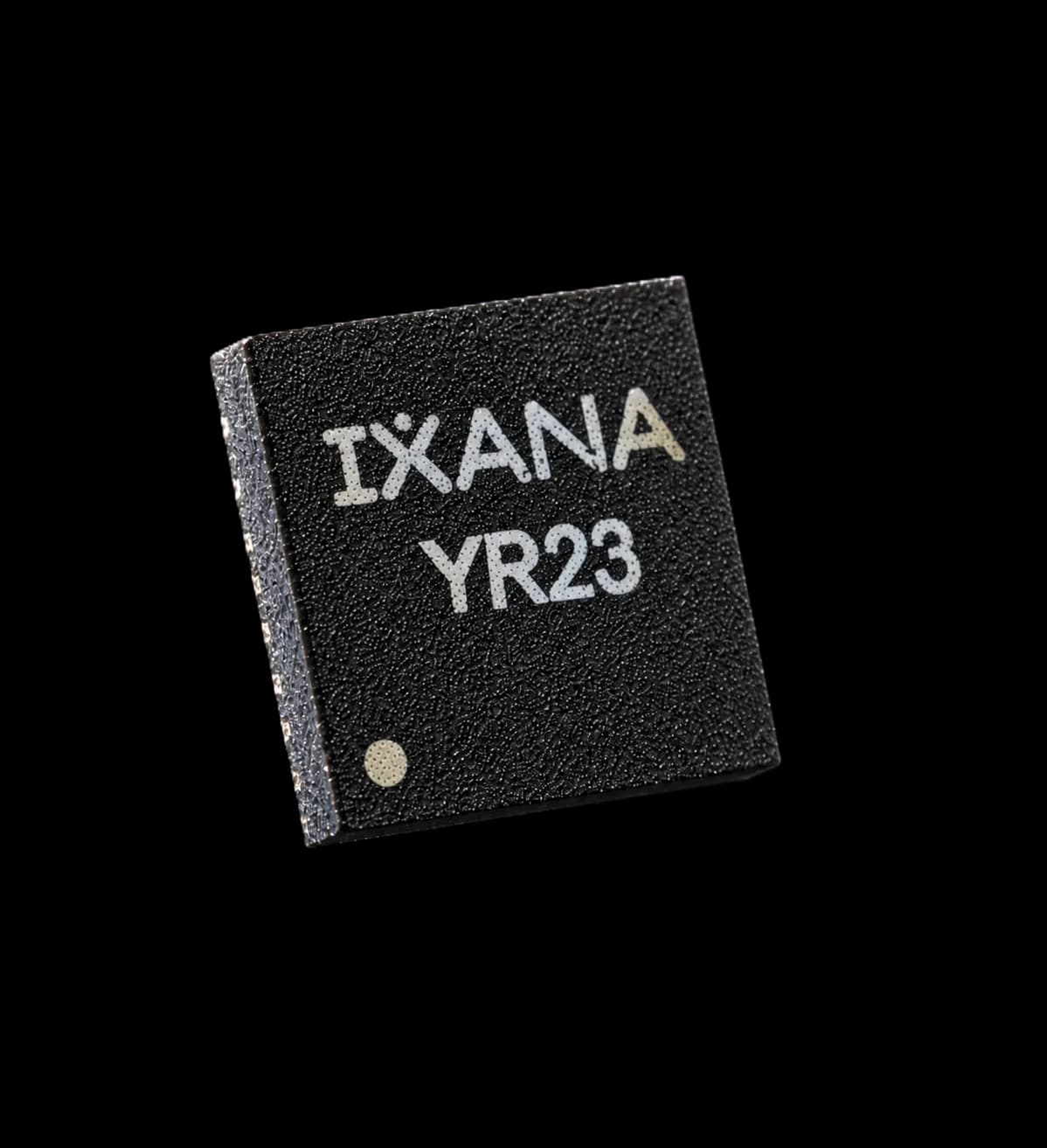
CURRENT SILICON
Shipping for integration
Application throughput is lower and depends on the workload.
About 0.2 nJ/bit, full-chip active TX/RX average at 5 Mbit/s. Excludes sensors and endpoint compute.
Energy comparison: Wi-R at 5 Mbit/s, approximately 0.2 nJ/bit, full-chip active TX/RX average. Comparator: Nordic nRF54L15, Bluetooth LE 2M, +4 dBm.
The configurations differ. This is not a complete-product battery-life comparison.
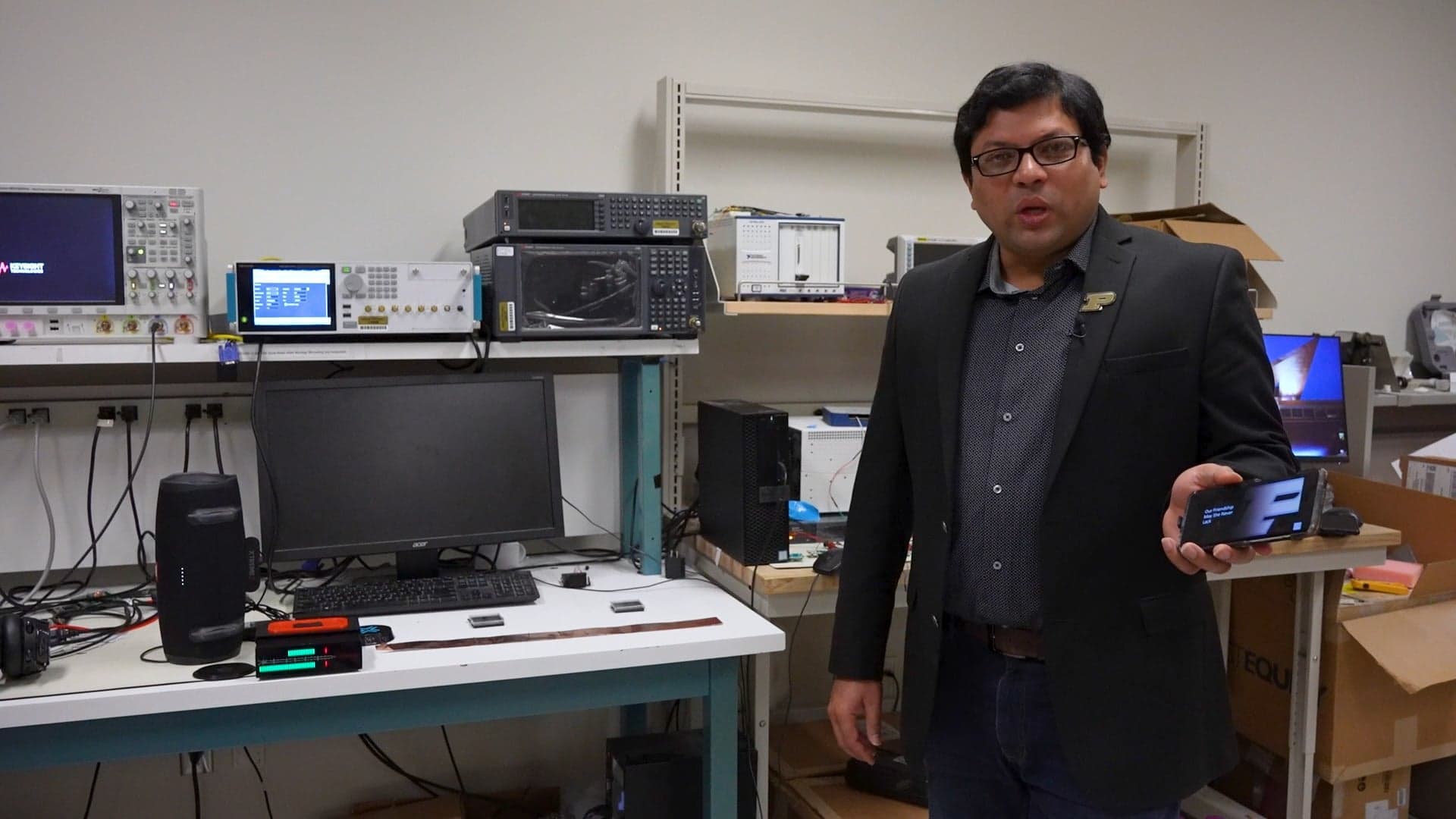 Open communication demo
PUBLISHED DEMONSTRATION · APRIL 2024
Explore Ixana’s published Wi-R communication video in the demo gallery. Playback is your choice.
This earlier demonstration is separate from the current YR23 silicon measurements. Board revision, cable roles, and current evaluation configuration should be confirmed with the team.
ENDPOINT INTEGRATION
Connect each host to a Wi-R interface and coupling electrode. Each product retains its own local power supply.
WORKED SYSTEM CONCEPT
A conceptual wearable system collects sensor and vision payloads, processes them locally, and returns a result.
The sequence below illustrates traffic planning; it is not a validated application or a timing guarantee.
Conceptual transfer sequence
The sensor sends its sample payload to local compute when scheduled.
Glasses send a selected image or event to local compute in another transfer opportunity.
Local compute sends a notification or interaction result to the watch.
These transfers share the connection. They are not independent simultaneous full-rate links. Protocol overhead, retries, host processing, and each payload’s timing requirements reduce the capacity available to applications.
ENGINEERING FIT
Start with the complete system: endpoints, physical path, power, software, and workload.
Each endpoint needs a Wi-R transceiver, host connection, and coupling interface.
Endpoint architectureBudget power for each complete endpoint, including sensors and host processing.
Measurement boundaryRequest the YR23 interface documentation, SDK, and bring-up guide for your hardware revision.
Request integration documentsReview coupling, suitable materials, mechanical geometry, movement, and operating environment together.
Discuss the physical designUse the raw PHY rate as a starting point. Establish payload capacity, scheduling, and latency for your application.
Rate and throughput notesThe YR23 kit lists two boards, BER/PER testing, documentation, SDK, and example scripts. Confirm revision and availability when enquiring.
YR23 evaluation kitPublic: active chip energy, the named comparison configuration, and what the measurement excludes.
Public kit listing: paired boards and evaluation tools. Request the current revision and ordering route.
Ask for the matching datasheet, host-interface details, electrode guidance, SDK, and getting-started instructions.
No. Bring an early architecture or a general question. A proposed endpoint layout and payload needs help the team identify an evaluation route, but they are optional.
Yes. Use the enquiry form to request the YR23 datasheet, SDK, host-interface information, and electrode guidance for the intended revision. The team can clarify access and the appropriate starting kit.
No. The published figure covers active chip communication under its stated conditions. Your sensors, host processor, power conversion, traffic pattern, and other components need their own power budget.
EVALUATE Wi-R BAN
We’ll discuss your architecture and help identify the appropriate evaluation route. An early idea or a general/company conversation is welcome.
Name and email are enough to start. Company and system details are optional.

