All-day
MEASURED SYSTEM
Continuous video in a smart-glasses prototype
Move heavier compute out of the glasses while keeping sensing where it belongs.
Measured prototype · 480p · 15 fps · monochrome
Ixana builds silicon that connects sensing, compute, and action across a person, robot, or machine.

The next wave of AI
Physical AI must sense and respond continuously.
Sensors belong where the signals are. Compute can sit elsewhere.


Those parts still need to work as one system.
Physical AI needs that coordination without the data cables.
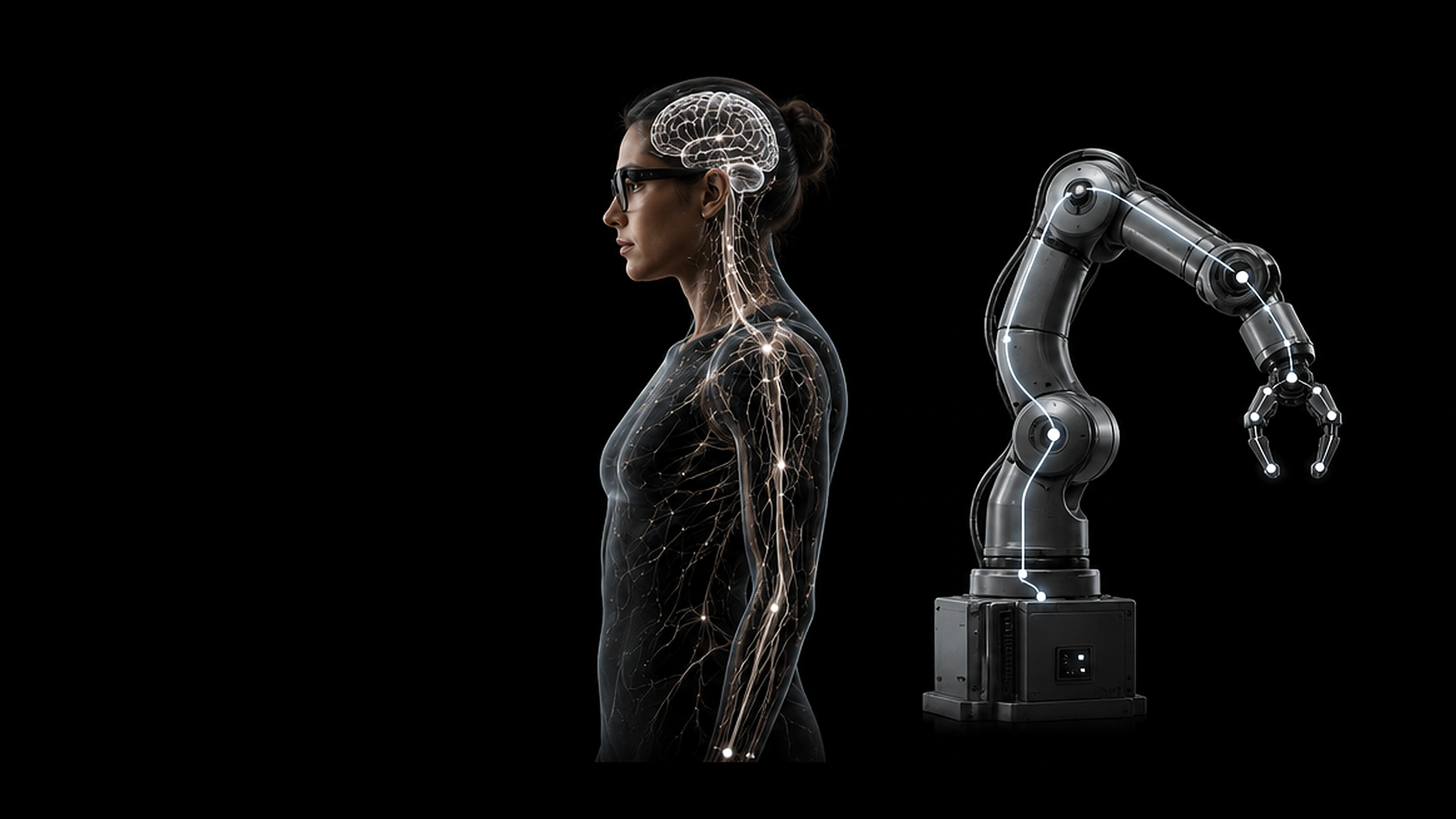
The next wave of AI
Physical AI must sense and respond continuously.
Sensors belong where the signals are. Compute can sit elsewhere.
Those parts still need to work as one system.

Physical AI needs that coordination
without the data cables.


Introducing Wi-R
Wi-R uses localized electric fields to carry data along a person or machine, and across short gaps between nearby devices.

Illustrative communication paths.
Field placement and coupling depend on the product architecture. Wi-R requires an interface at each participating endpoint. These illustrations are not measured field maps.
Shipping silicon
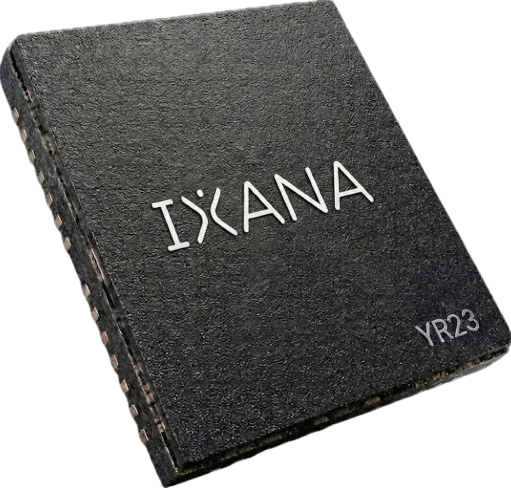
Shipping for integration
5 Mbit/s
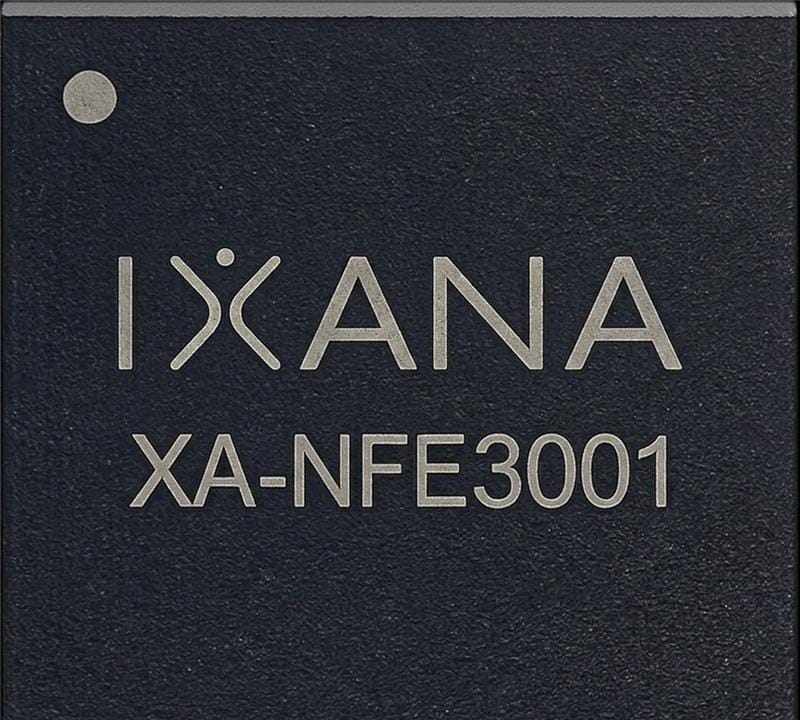
Wi-R in a QFN package
Lower energy per bit than Bluetooth LE 2M
Proven in silicon
5 Mbit/s Wi-R is shipping in QFN for customer integration. 20 Mbit/s silicon is starting to sample.
5 Mbit/s
Shipping for integration
Packaged Wi-R silicon shown
38×
Measured silicon
About 0.2 nJ/bit, full-chip active TX/RX average at 5 Mbit/s.
20 Mbit/s
Starting to sample
XA-NFE3001 near-field electric communication tier
WHEN CONNECTIVITY STOPS DICTATING THE DESIGN
Put sensing and compute where each works best.
WEARABLE AI
MEASURED SYSTEM
Move heavier compute out of the glasses while keeping sensing where it belongs.
Measured prototype · 480p · 15 fps · monochrome
Enabled applications
MEDICAL & BIOSENSING SYSTEMS
Keep wearable and medical sensors small, and move heavier processing to nearby compute.
Explore medical systemsROBOTICS, AUTOMOTIVE & INDUSTRIAL SYSTEMS
Connect sensors, compute, and control across robots, vehicles, and industrial equipment with less dependence on routed data cables.
Explore these systemsMISSION-CRITICAL SYSTEMS
Connect worn sensors, displays, and compute within one local system.
Explore mission-critical systemsWHEN CONNECTIVITY STOPS DICTATING THE DESIGN
Put sensing and compute where each works best.

WEARABLE AI
Keep the camera in the glasses and move heavier compute to a pocket device.
Enabled applications

MEDICAL & BIOSENSING SYSTEMS
Keep wearable and medical sensors small, and move heavier processing to nearby compute.
Explore medical systems
ROBOTICS, AUTOMOTIVE & INDUSTRIAL SYSTEMS
Connect sensors, compute, and control across robots, vehicles, and industrial equipment with less dependence on routed data cables.
Explore these systems
MISSION-CRITICAL SYSTEMS
Connect worn sensors, displays, and compute within one local system.
Explore mission-critical systemsThe node multiplier
The connection repeats at each participating sensor, compute, or control endpoint.
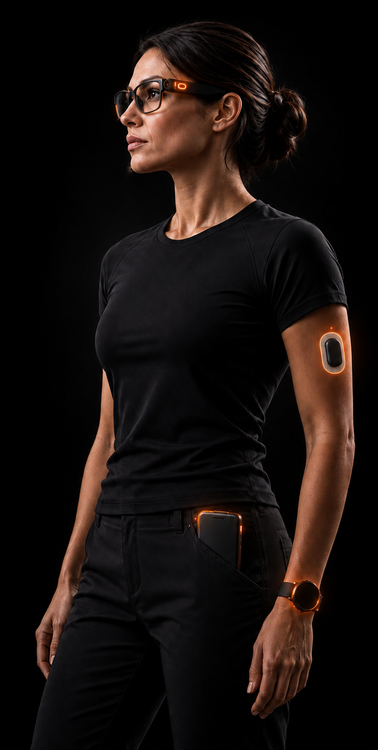
Personal systems
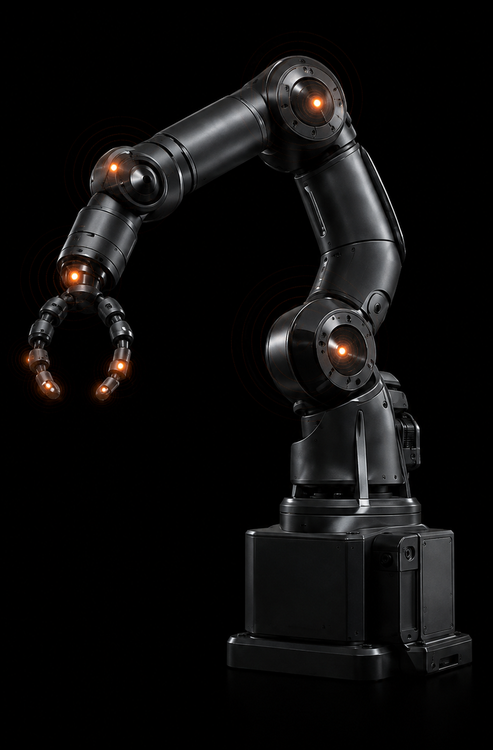
Robotic systems
Start inside one product Integrate Wi-R at each participating endpoint.
See how Wi-R connects a systemTHE NODE MULTIPLIER
Wi-Fi multiplied the number of connected devices per home. Wi-R is built to multiply sensing, compute, and control endpoints inside each physical system.
Instead of making every endpoint a complete standalone device, product teams can distribute functions across one coordinated system.
See how Wi-R connects a system
Wearable sensing + local compute

Joint sensing + tactile intelligence + local control

Start inside one product Integrate Wi-R into each participating endpoint.
External evidence
Independent hands-on · 7 January 2026
“Of all the things I saw in my scattered time at CES this year, it might be Wi-R that I think about the most.”
Scott Stein · CNET
External validation
Public partner announcement · 7 May 2024
Strategic alliance to integrate Wi-R into tactical audio, radios, and control interfaces.
Government program record
Public U.S. Air Force Phase II award and a Department of Defense Other Transaction Agreement for Tactical Augmented Reality.
Scientific foundation
Published work spanning E-field channel physics, signal confinement, and communication silicon.
Independent hands-on · 7 January 2026
Scott Stein · CNET“Of all the things I saw in my scattered time at CES this year, it might be Wi-R that I think about the most.”
Continue exploring
Explore the technology, silicon, applications, and research behind Ixana.
Explore the technologyFor product teams exploring Wi-R integration.
Contact IxanaIdeas, evidence, milestones
Silicon milestone · 25 February 2026
20 Mbit/s near-field communication silicon, now sampling
Read the milestone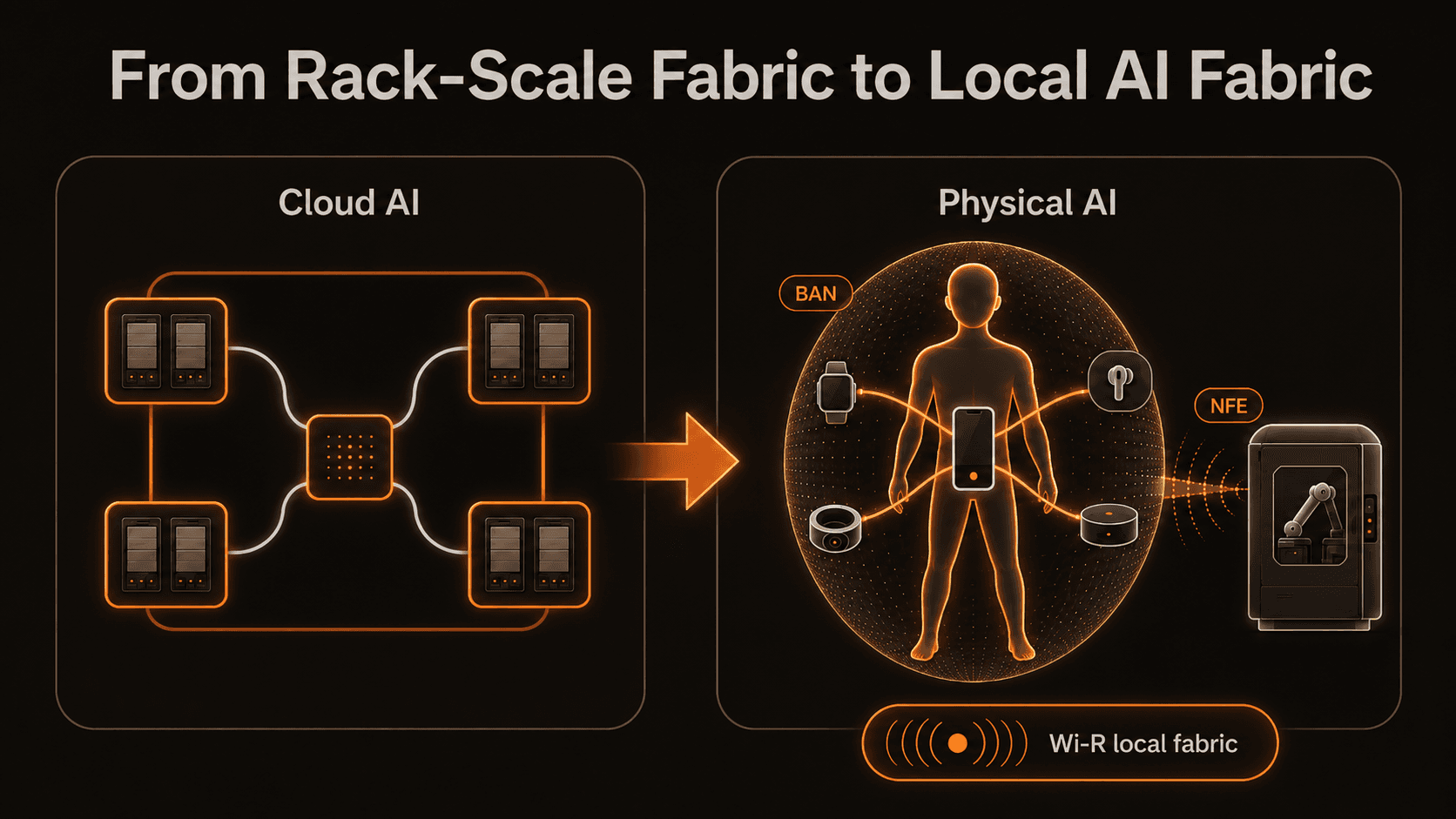
Technology · 7 July 2026
Why distributed physical systems need a local data fabric across sensors, compute, and action
Read insight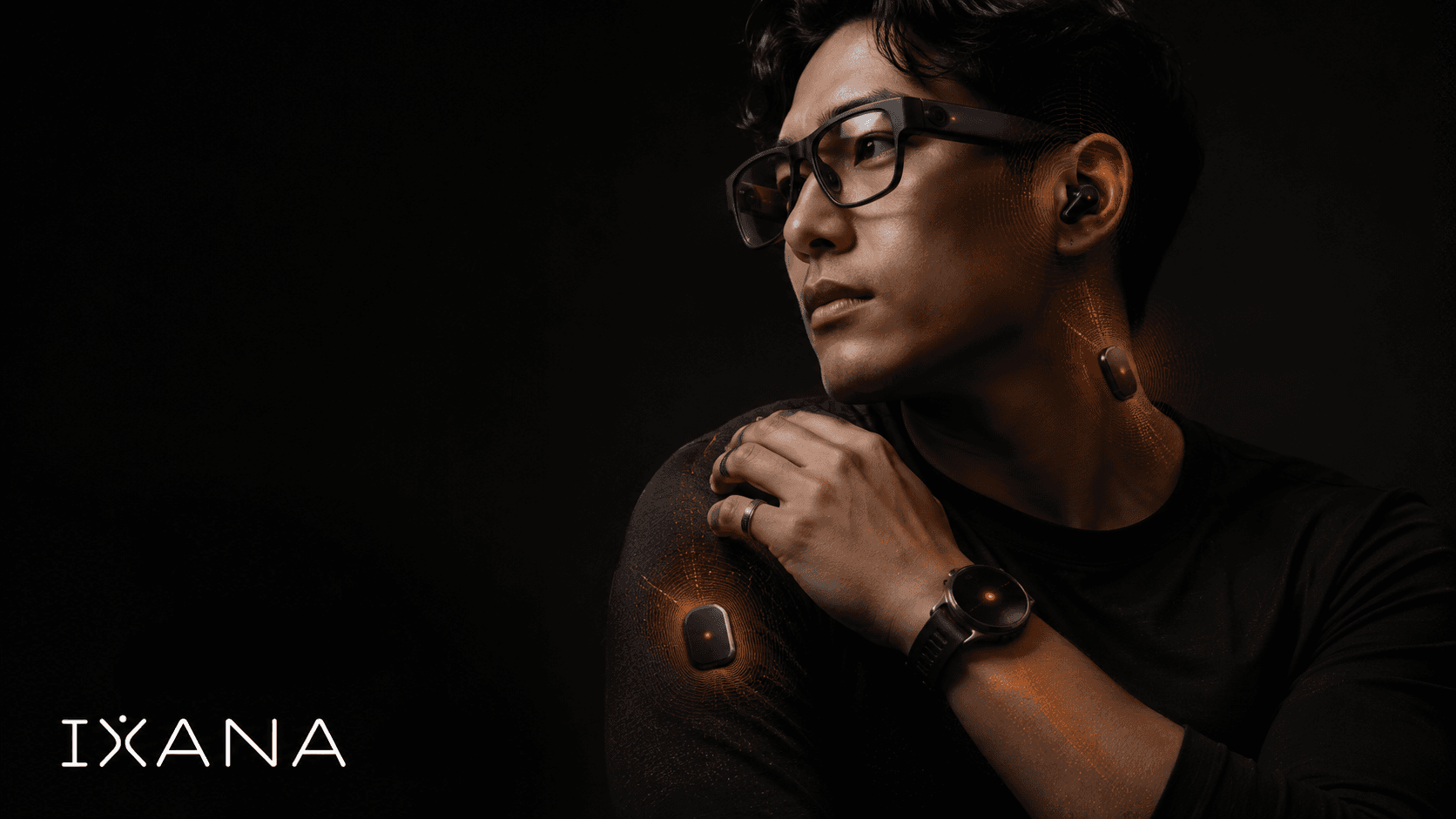
Physical context · 17 August 2026
How local signals can help software understand relationships among people, devices, and machines
Read insight


