Ixana Launches Wi-R NFE: Extended-Range NFC Alternative for High-Speed Short-Range Links
Dec 11, 2025Ixana Team
3 min read
New Wi-R Near Field Electric (NFE™) transceiver delivers 50x the energy efficiency of NFC with sub-millisecond latency and longer range, enabling secure, 'wire-like wireless' connectivity for industrial, medical, gaming, and defense applications.
Revolutionary Performance Specifications
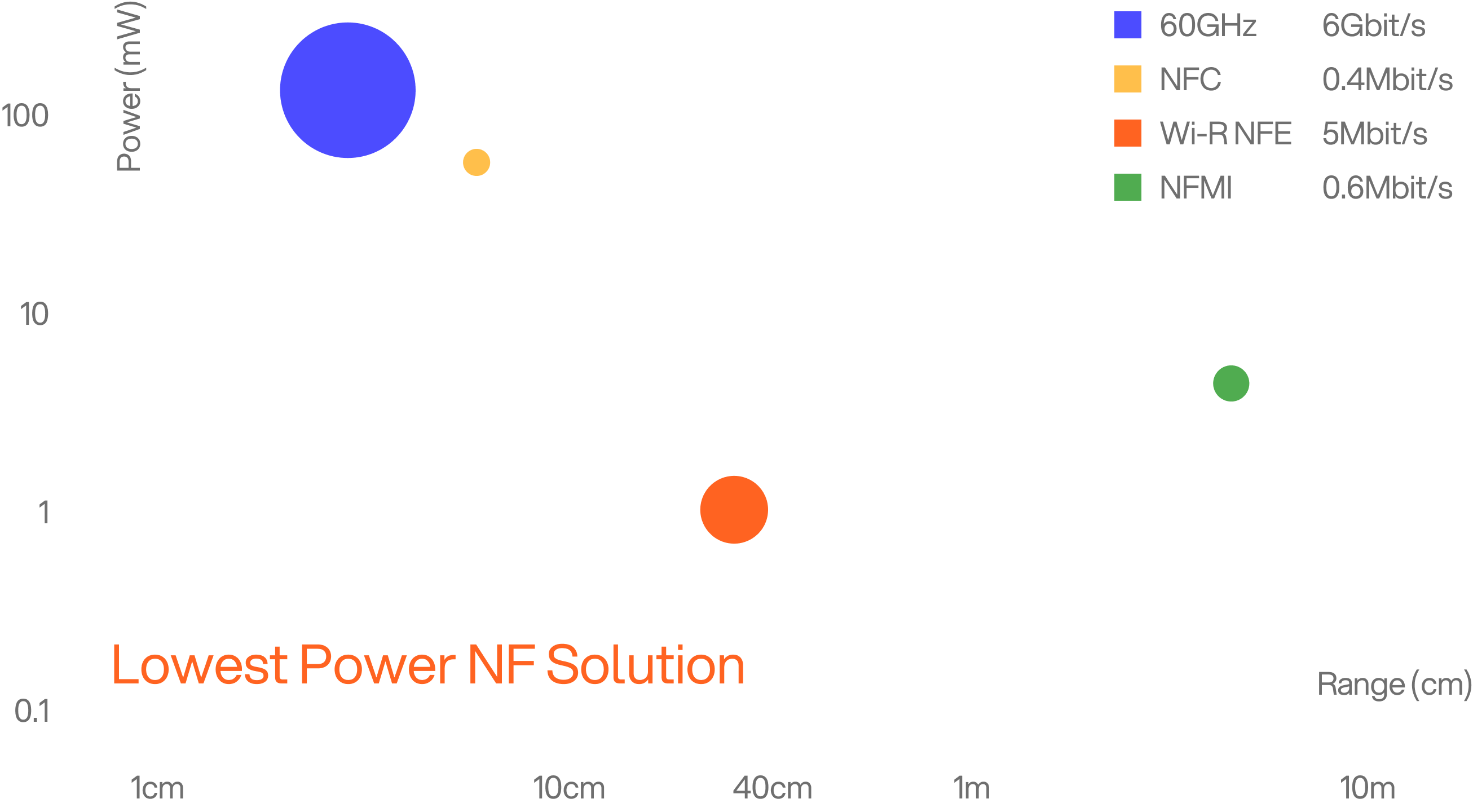
Ixana today announced the launch of the XA-NFE2001, a breakthrough transceiver designed to solve the "last decimeter" connectivity bottleneck for the AI era. Delivering 5 Mbit/s data speeds at under 1 milliwatt of power, XA-NFE2001 is more than 50x more energy-efficient than standard NFC (in nJ/bit) and approximately 25x lower power, enabling a new class of long-life, battery-powered devices that can communicate instantly and securely.
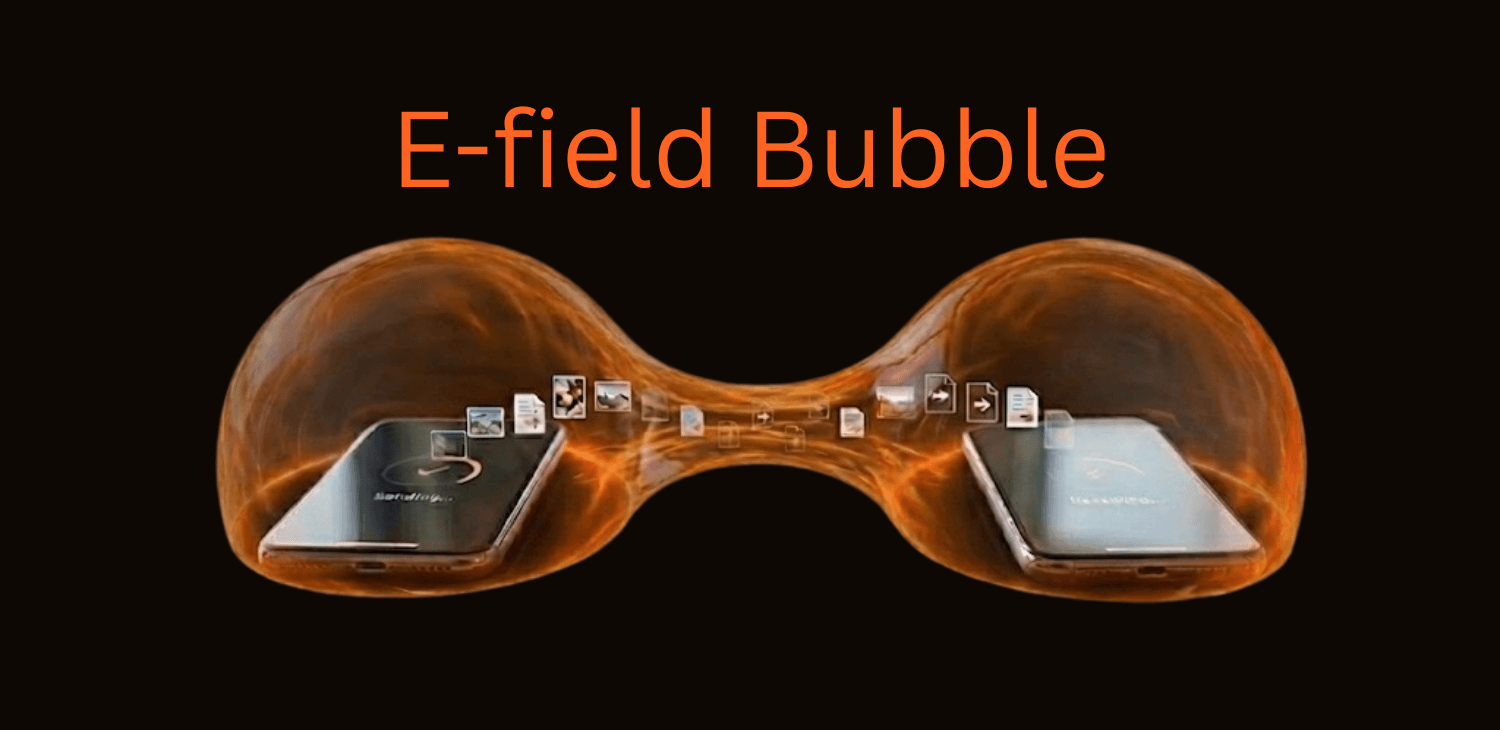
Unlike traditional wireless protocols such as Bluetooth, which broadcast RF energy into the environment, and NFC, which is limited to very short-range magnetic coupling, Wi-R NFE uses a contained electric field between devices. This electric-field coupling acts like an extended-range invisible wire, creating a fast data channel that exists only within a near-touch region between devices. The result is an RF-silent, cable-like link that delivers multi-megabit performance without the battery drain or over-the-air attack surface of broadcast radio.
Why It Matters:
-
Industrial IoT and data centers: Sensors, gateways, and server equipment can be provisioned and updated quickly without relying on exposed USB or debug ports, reducing wear-out and attack surface.
-
Secure Defense: Drones and tactical gear can exchange mission-critical data silently in the field, without the RF emissions that expose location to electronic warfare systems.
-
Next-Gen Gaming: Sub-millisecond latency eliminates lag for wireless peripherals, while NFE's native close-range presence indication unlocks entirely new spatial interaction modalities between controllers and accessories.
"NFE bridges the gap for milliwatt-power, multi-megabit links at decimeter range, which is exactly what real-time, secure AI ambient layers need," said Shreyas Sen, Founder and CTO of Ixana. "With Air Force demand validation and Fortune 500 pilots underway, we're seeing demand across industrial, medical, and defense sectors where cables or battery life determine total cost of ownership."
Key Technical Specifications:
-
Energy & Power: < 1 mW at 5 Mbit/s for always-available short-range links (>50x higher energy efficiency (nJ/bit) and 24x more power-efficient than NFC)
-
Latency: Sub-millisecond end-to-end, ideal for real-time control, haptics, and responsive UX.
-
Range: 5-25cm operating range, with configuration options to tighten or extend range depending on application and data rate.
-
Throughput: 5 Mbit/s, 10x faster than standard NFC, supporting firmware updates, image transfer, and logs
-
Security: RF-silent electric-field coupling significantly reduces the feasibility of remote "sniffing" and can help minimize reliance on exposed debug ports, making physical separation a primary security boundary.
Validating this approach, the technology is grounded in peer-reviewed research published in Nature Communications Engineering and is already being tested in U.S. Air Force contracts for RF-silent drone operations.
Platform Alignment
The XA-NFE2001 Near-Field chip complements Ixana's YR23 Wi-R BAN chip, which is optimized for continuous, wearable links. Building on this, an integrated Wi-R BAN+NFE combo chip is in development. XA-NFE2001 is designed to integrate cleanly with post-quantum cryptography (PQC) stacks and secure elements, helping product teams align with emerging NIST security guidelines for long-lived edge devices.
Availability & CES 2026 Showcase
The XA-NFE2001 is available now for shipping. Experience technology in action at CES 2026 (Booth 10678, LVCC North Hall), featuring live demos including instant "fist-bump" file sharing and RF-silent data offload.
- To schedule a demo or request a development kit: Visit ixana.ai/news-events/ces2026 or contact sales@ixana.ai.
Resources
Product LaunchWi-R NFENear Field CommunicationIoTWearablesIndustrial
Ixana Team
Pioneering the Second Nervous System for Physical AI